← Back to all case studiesCase Study 01US Marketing AgencyLead Generation6yr Engagement
How I Replaced a $26K/Year Zapier Bill and Built the Lead Operations Engine for a US Marketing Agency
A six-year engagement that turned a Google Sheets operation into a fully automated, AWS-powered lead distribution and sales engine.
Client
US Marketing Agency (confidential)
Industry
Home Services Lead Gen
Engagement
2019 – Present (6+ years)
Status
● Still in production
$25K
Saved per year
on infrastructure
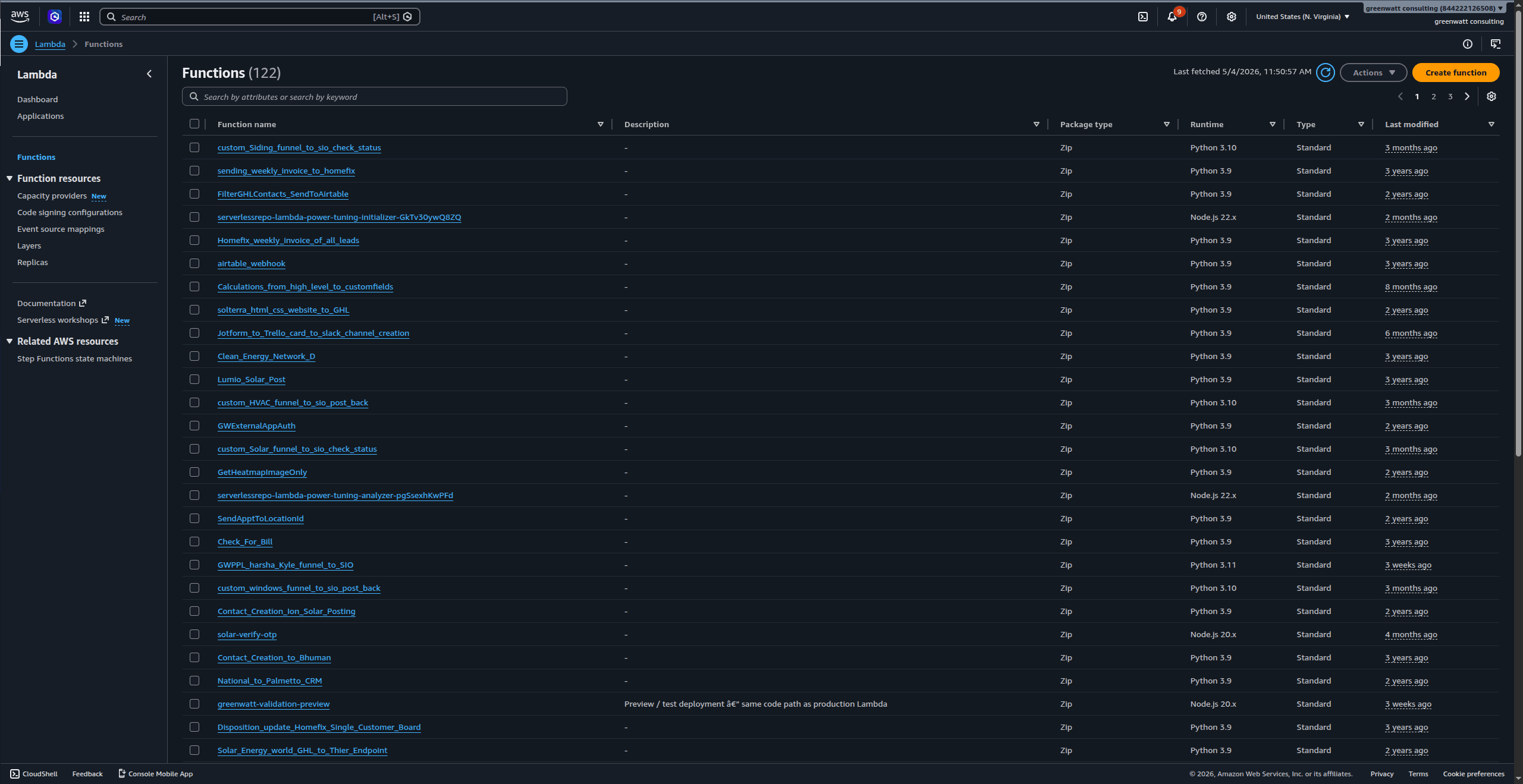
122
Lambda functions
in production
6+
Years running
without interruption
The SituationA US agency selling home-services leads — running on Google Sheets
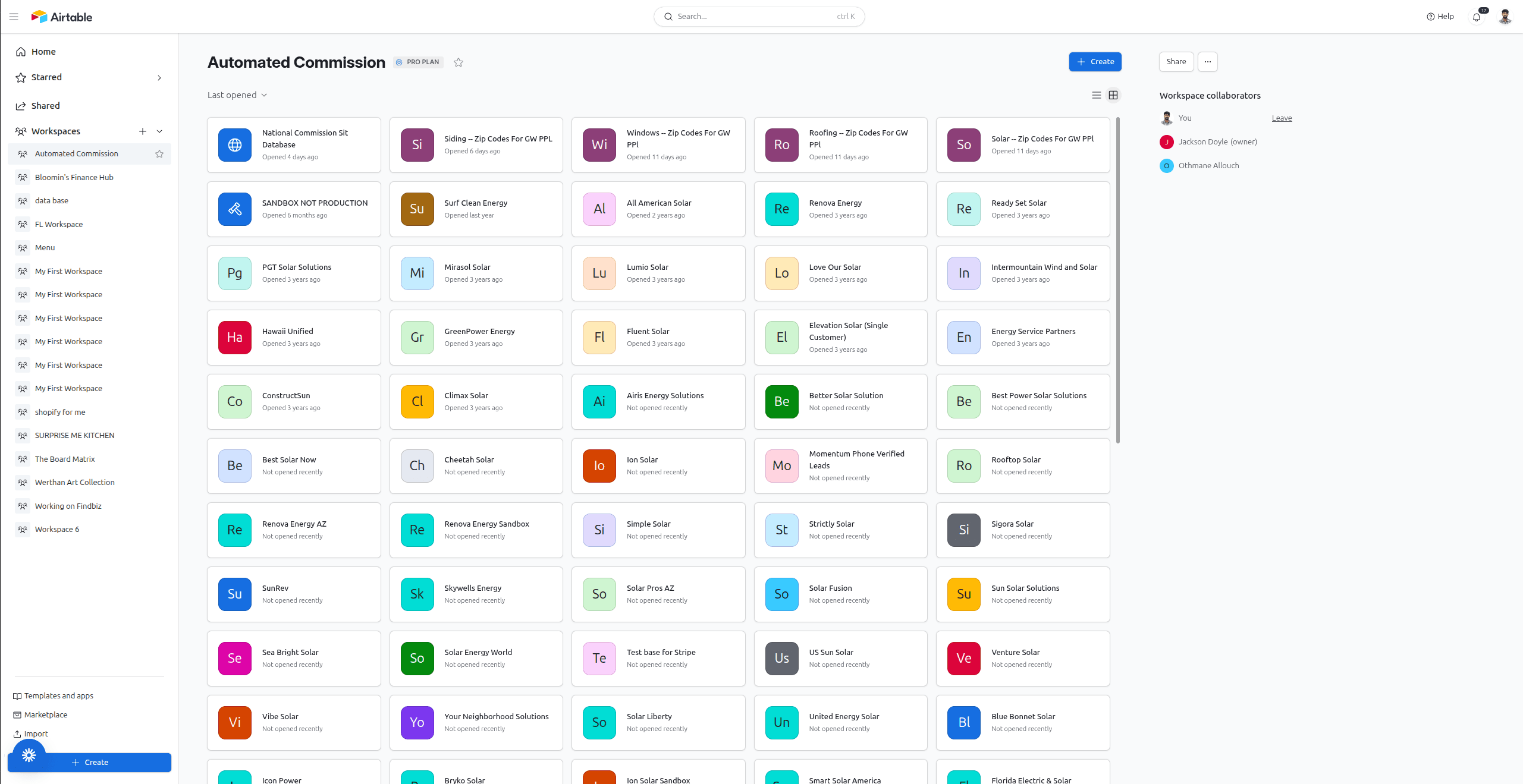
The client is a US-based marketing agency that sells home-services leads to buyers across the United States. When a homeowner submits a solar or roofing form, the agency's job is to verify the lead, match it to the right buyer based on geography and capacity, deliver it with a recorded call, and get paid. In reality, it's one of the most operationally complex businesses I've worked on — every lead touches 6–8 systems before the cash hits the account.
When I joined in 2019, the entire operation ran on Google Sheets.
The ProblemTwo people spending their day doing what software should do
- Manual lead distribution. Every incoming lead had to be matched to a buyer by hand — rotating fairly, tracking monthly purchase limits, handling geography. Mistakes meant unhappy buyers.
- Manual call routing. Every lead needed an outbound call from a call center, with the recording attached back to the lead record before the lead could be sold.
- Lead quality was a guessing game. Bad leads damaged buyer relationships and triggered refund disputes. No scoring system existed before delivery.
- Onboarding a new buyer took days. Slack, payment setup, calendar, CRM, contract — every new buyer meant five tools touched manually.
- The previous developer had become unreliable — and the entire revenue engine was sitting on Google Sheets and undocumented Zapier flows.
What I BuiltEight systems rebuilt end-to-end over six years
01Lead Distribution Engine (Round-Robin by Zip Code)
Custom round-robin algorithm that matches each incoming lead to the right buyer based on zip code coverage, monthly purchase limits, and rotation fairness. Replaced two people doing this manually.
02Call Center Integration
Two-way pipeline between the lead system and Vicidial. Leads post automatically; once the agent finishes the call, the recording posts back to the Airtable record — no manual handling.
03Lead Scoring Pipeline (Custom MVP)
Integrated eHawk for fraud and quality verification, then built a scoring layer on top. Every lead gets scored before it reaches a buyer. Trusted Forms attached for legal compliance on every sold lead.
04Custom Sales Funnels for 9 Verticals
Designed and built funnels for Solar, Windows, Roofing, Kitchen, Bath, Plumbing, HVAC, and Siding — hosted on AWS EC2. Custom JavaScript for auto-completing addresses on every funnel.
05Solar Heatmap on Thank-You Pages
The post-submission page renders a satellite heatmap of the homeowner's actual roof — showing sunlight intensity and projected savings. Built as a buying-intent boost.
06Buyer Onboarding Automation
A new buyer signing up triggers: Slack channel created, recurring Stripe subscription configured, Calendly synced, GoHighLevel CRM contact created, JotForm routed, DocuSign agreement dispatched — all without human touch.
07The $26K/Year Zapier → AWS Migration
The system had grown to 200+ Zapier automations with a ~$2,200/month bill. I migrated every workflow to AWS Lambda — 122 functions now run the entire operation. Monthly bill: ~$100. That's ~$25,000/year saved, with better reliability and no task limits.
08Self-Healing Token Manager
Every workflow reports errors directly to Slack. A centralized Token Manager means every Lambda fetches a fresh auth token from one source — one change point, system-wide. Anthropic's Claude is wired in for fast issue diagnosis.
The OutcomeWhat actually changed
✓~30+ hours per week saved across the operations team. The roles that used to be "manually distribute leads all day" no longer exist as full-time jobs.
✓~$25,000/year saved on infrastructure by migrating from Zapier to AWS Lambda — without losing a single workflow.
✓Buyer onboarding went from a multi-day, multi-tool checklist to a single trigger.
✓Lead quality became measurable for the first time, via the eHawk + scoring layer.
✓The system is self-monitoring — errors surface in Slack with full context, not silent failures.
✓6+ years of reliability. Still running production traffic today. New verticals added (siding) without rebuilding anything.
Tech Stack
AirtableAWS LambdaAWS EC2VicidialGoHighLevelCalendlyStripeSlackJotFormDocuSignActiveProspecteHawk
Want this for your agency?
Book a free 20-minute audit call. I'll look at your current setup, tell you exactly what I see, and give you a clear picture of what a fix looks like.
Book a free audit →