Building a Modular AI Influencer System — Generated and Posted to Social Media Without Human Touch
A 3-week fixed-price build that took one person out of daily content operations entirely — scalable to any number of AI personas, operable by a non-technical VA.
The BriefIn the client's own words
“Design and implement a modular, automation-first AI influencer system capable of generating and posting realistic image content to social media at scale, while minimizing detection risk through controlled content variation, behavioral randomization, and perceptual realism. The system must be: Scalable — easy to add new houses and influencers. VA-friendly — operable by non-technical staff. Future-proof & Modular — supports new image models, formats, and platforms. Risk-aware — optimized for longevity and reach, not overengineering.”
— Jure Erlic, CanadaThe ProblemThe bottleneck wasn't generation — it was everything around it
Before this build, Jure was running every step manually:
- Brainstorming concepts, outfits, locations, and poses for each post
- Writing prompts for the image model
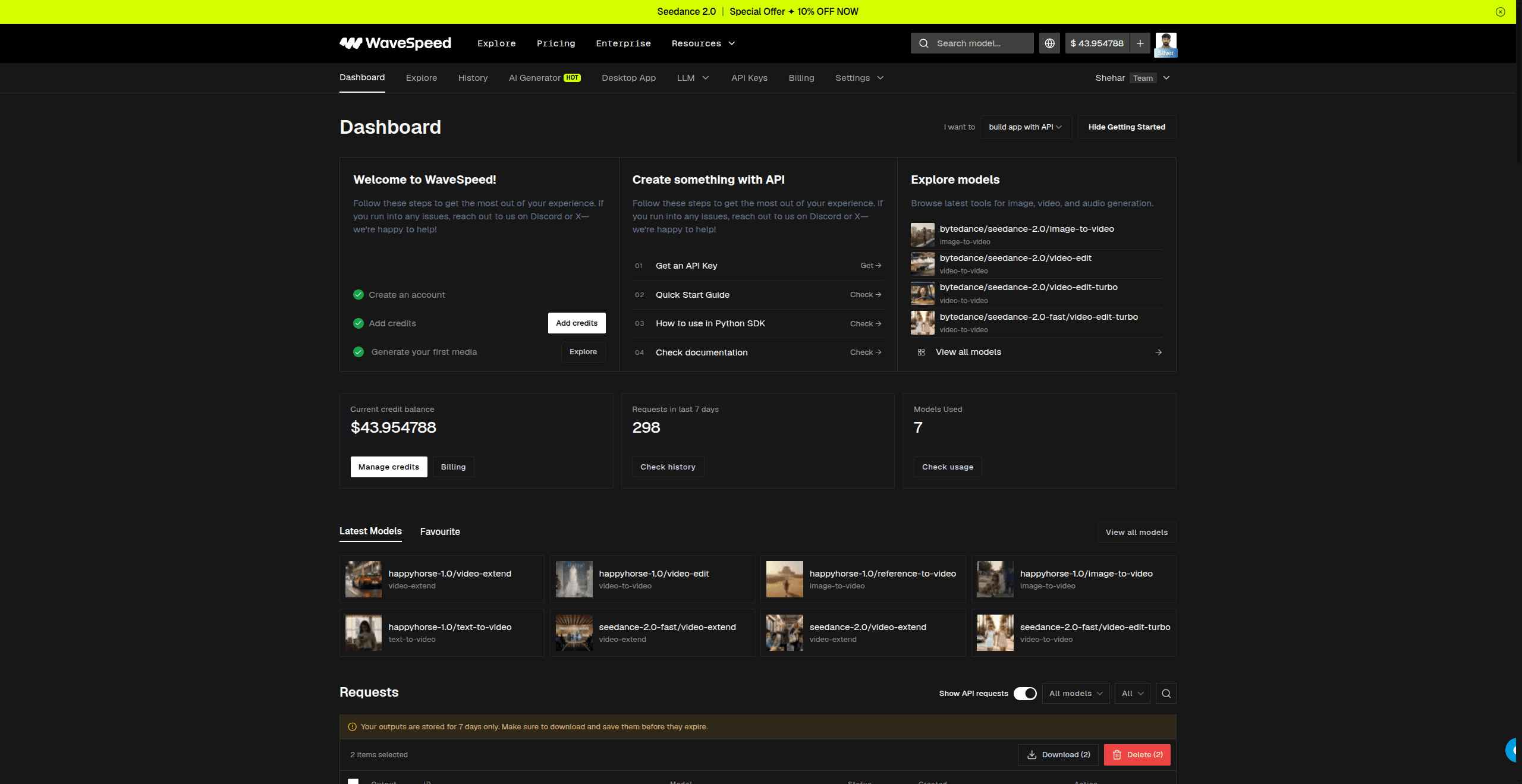
- Generating images through Wavespeed
- Stripping AI metadata from the output files
- Uploading and scheduling each post
The bottleneck wasn't image generation — that's fast. The bottleneck was creative direction (figuring out what to generate) and mechanical operations (everything between "image done" and "post live"). Producing daily content across multiple AI personas was unsustainable for one person.
What I BuiltThe AI Influencer Swarm Manager
The "Houses and Rooms" Architecture
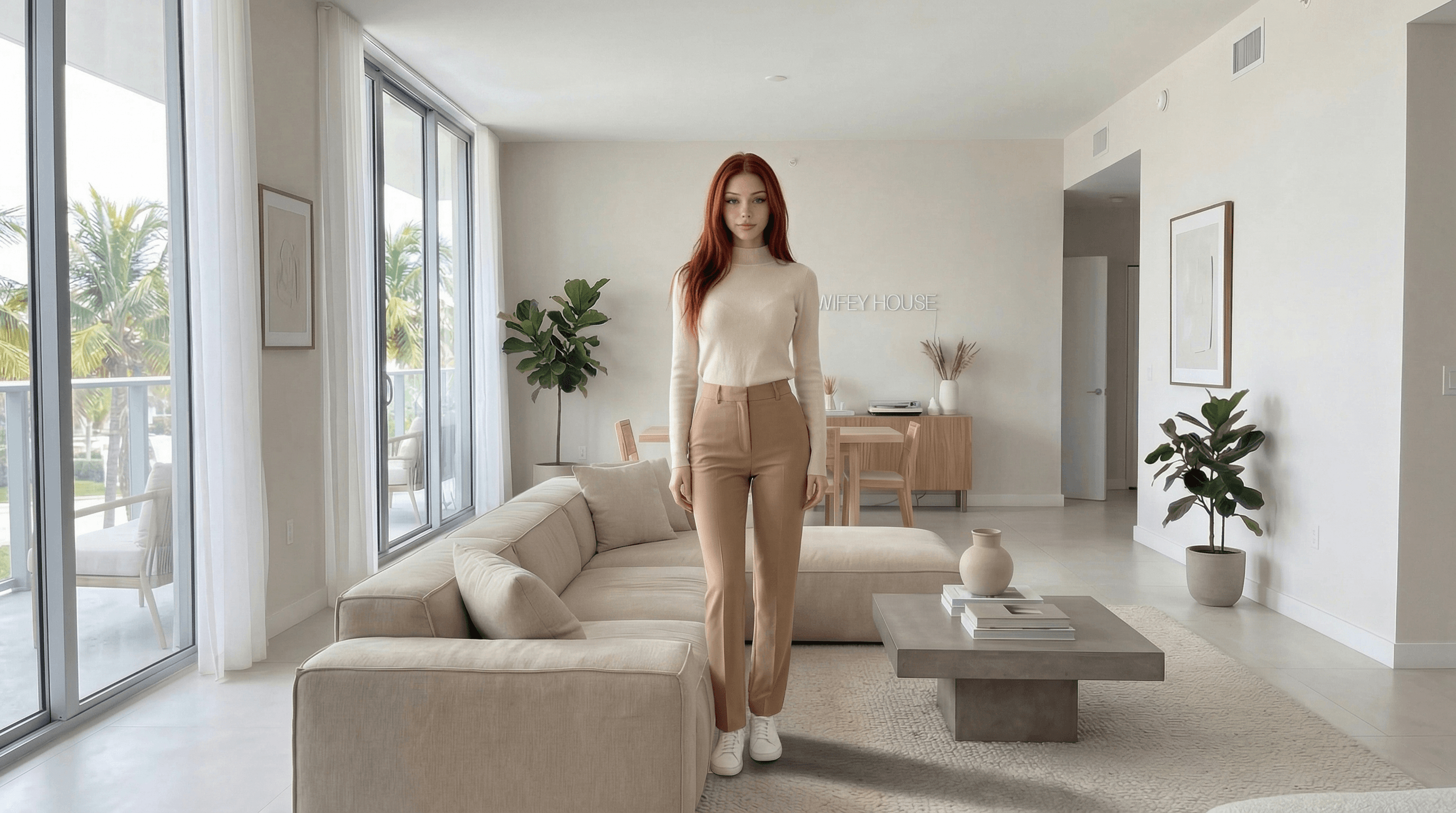
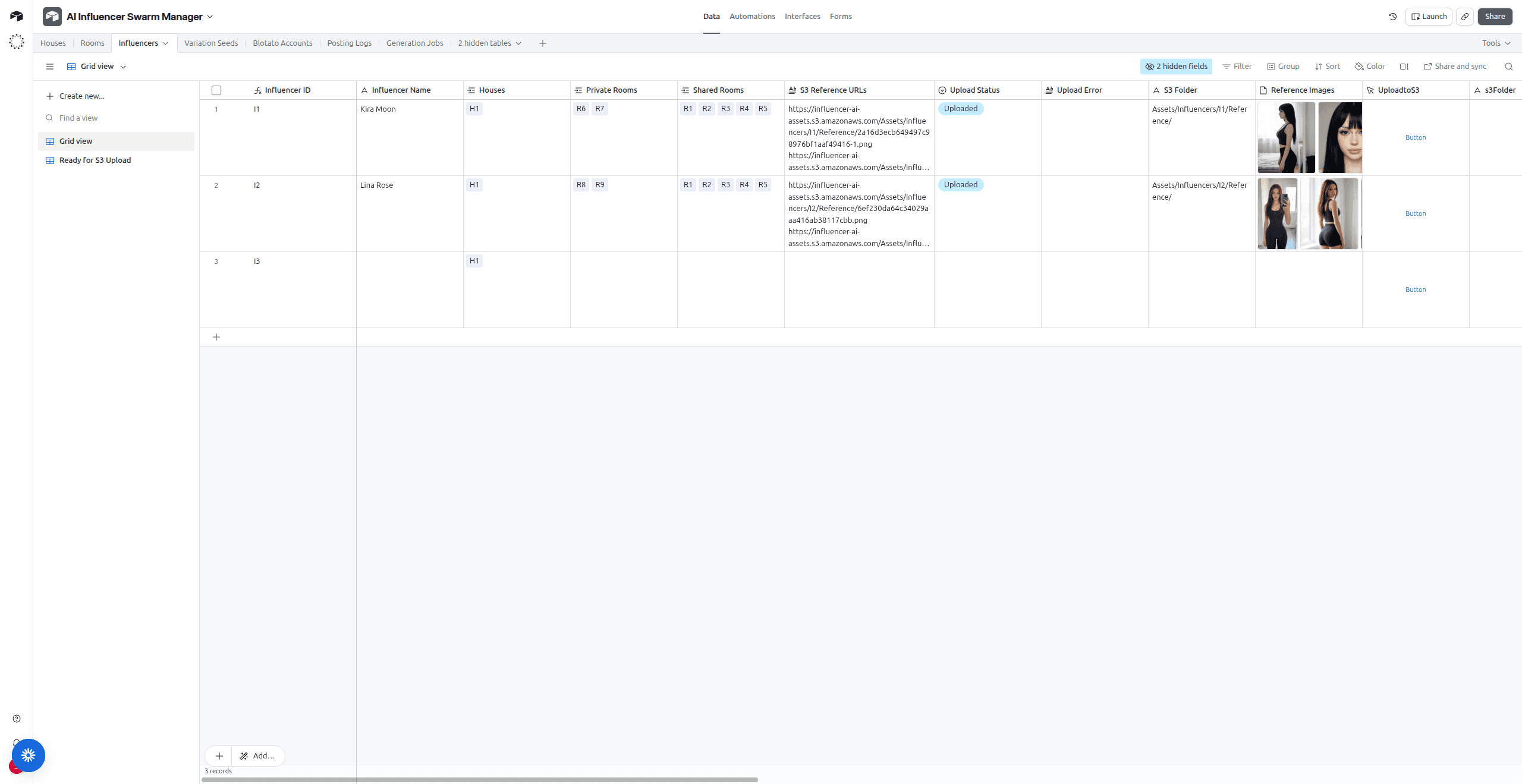
Rather than generating images in random environments, I designed each AI persona's world like an actual home. The base has a Houses table and a Rooms table — some rooms are shared across personas (kitchen, living room, balcony) and some are private to each persona (bedroom, dressing room). Every generated image is anchored to a specific room. Followers subconsciously recognize the spaces over time — exactly how real influencer accounts build visual identity.
The pipeline, end to end:
Auto-Prompt Generation
From a small set of keywords per persona, GPT generates high-quality detailed image prompts — handling styling, clothing, pose, lighting, and room context. Eliminates the creative bottleneck entirely.
Scheduled Triggering
At a configured time of day per persona, Airtable kicks off the generation run automatically.
AWS Lambda Webhook
Airtable sends the record ID to a Lambda function, which pulls full record details via the Airtable API.
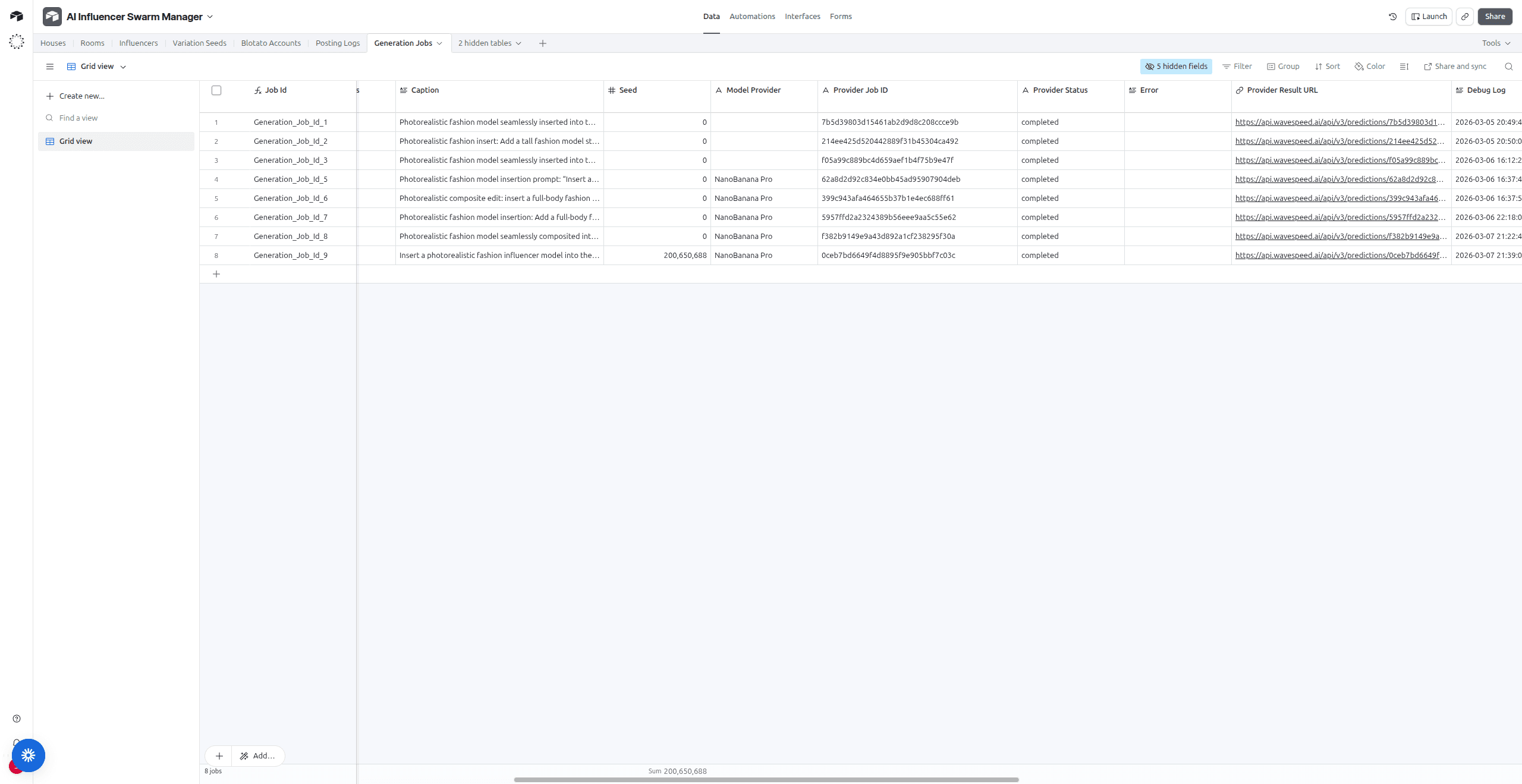
Image Generation
Lambda passes the prompt and persona reference images to Wavespeed (Flux Schnell, Flux Pro, and Google Nano-Banana 2 models).
Metadata Stripping + S3 Upload
A second Lambda receives the generated image, runs a Python script to strip all AI metadata, then organizes and uploads the file to AWS S3 in the correct persona/room folder structure.
URL Back to Airtable
Only the S3 URL gets stored — not the file itself. Keeping images in S3 and only URLs in Airtable keeps the bill flat regardless of generation volume.
Publishing via n8n
An n8n workflow picks up the ready post and publishes it on schedule. No human involvement past initial configuration.
The OutcomeWhat actually changed
What the Client SaidVerified Upwork review, March 2026
Shehar is really great to work with. He is excellent at understanding client needs and executing the plan as agreed upon. I highly recommend working with him! I'd love to work together again in the future.
Want a system like this?
Whether you're running an AI content operation or a marketing agency thinking about offering AI content services — the same backbone applies. Book a free audit call.
Book a free audit →